


Fusiliers and the American War of Independence
Key People

From American traitor Benedict Arnold, to British spymaster John Andre, below are short biographies of some significant figures involved in the American War of Independence and the stories of the 5th, 7th and 20th Regiments.
The British
Harriet Acland (1750-1815)
Lady Harriet accompanied her husband Major Acland of the 20th to Quebec in 1776. She was part of the Saratoga campaign, travelling down from Quebec in 1777. At the time it was not uncommon for women to accompany military campaigns, often working as cooks, domestic servants, or nurses.
After her husband was shot in both legs and taken prisoner in the second battle of Saratoga, Lady Harriet persuaded General Burgoyne to let her travel across the Hudson River to the American camp to find him. Six months pregnant at the time, she travelled under a flag of truce and was made to wait for several hours at gunpoint.
“All I could furnish to her was an open boat and a few lines written upon dirty and wet paper to General Gates, recommending her to his protection,” later wrote Burgoyne.
The persuasive Lady Harriet found General Gates and her husband was released shortly afterwards into her care. The two returned to Britain where he died the following year. She wrote a journal detailing her adventures and became celebrated for her bravery.
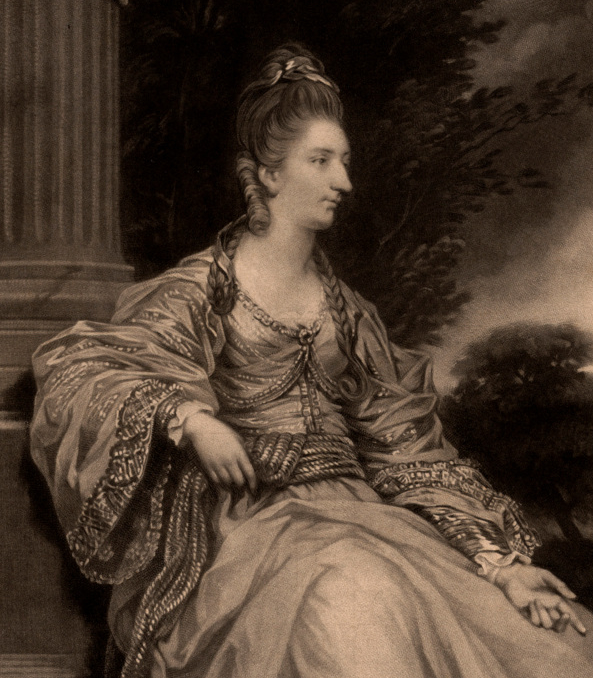 Lady Christian Henrietta Caroline ('Harriet') Acland published by Samuel William Reynolds, after Sir Joshua Reynolds mezzotint, published July 1820 (1771) National Portrait Gallery
John Andre (1750-1780)
Major Andre of the 7th Foot was the head of Britain’s intelligence operations during the war. He was executed for espionage in 1780 on the orders of General George Washington.
Andre was first captured at Fort Saint-Jean in Canada in 1775 and freed the following year in a prisoner exchange. He was promoted rapidly taking charge of intelligence in 1779. He was a popular figure, seen as a model of British military virtue. Andre's skills included speaking French, German and Italian, and being accomplished at drawing, painting and singing.
He was captured behind enemy lines in 1780. Andre was discovered dressed as a civilian and carrying documents that detailed General Benedict Arnold’s treasonous plot to surrender the fort at West Point. He was denied a soldier’s death by firing squad and was instead hanged. His death triggered widespread mourning in Britain. King George III financed the erection of a monument to Andre in Westminster Abbey.
Andre’s renown as a tragic hero lasted well into the 19th century, with his remains repatriated in 1821 and a monument erected in the US a century after his death.
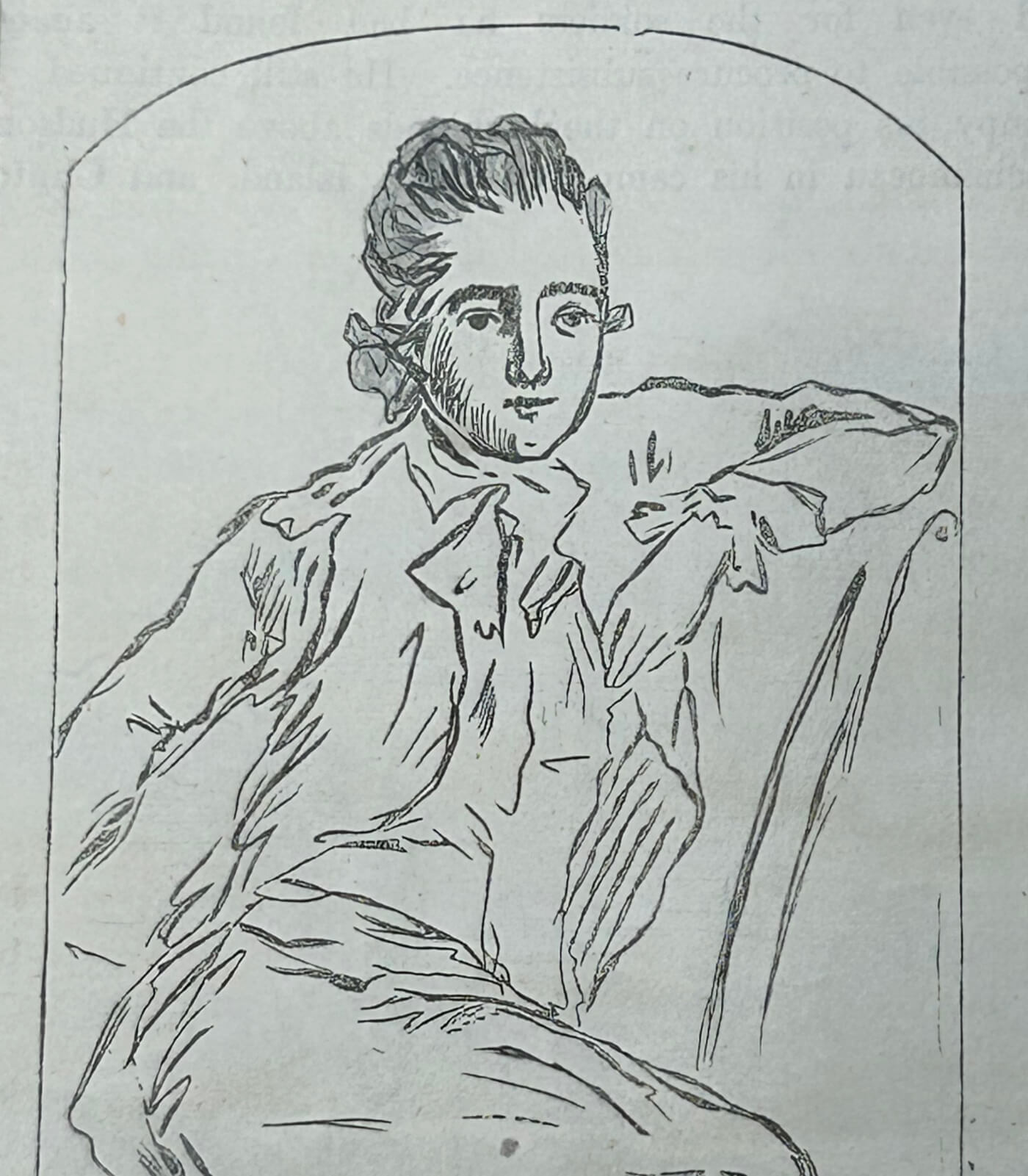 Self-portrait by John Andre, published after his death, print from a 19th century scrapbook. Fusilier Museum London
John Burgoyne (1722-1792)
Major General Burgoyne is best known for leading the British campaign that resulted in defeat at the Battle of Saratoga in 1777.
Burgoyne had witnessed the costly British victory at Bunker Hill early in the war and was reported to be angered at the lack of an effective strategy. He proposed the plan to isolate New England from the central and southern colonies by marching south from Canada and joining up with British forces marching north.
After some initial success, the plan foundered due to lack of reinforcements and the difficulty of marching for months through the wilderness. Popularly known as “Gentleman Johnny”, Burgoyne faced criticism for his large amounts of personal baggage on the campaign and fondness for champagne.
He was eventually forced to surrender his army of more than 5,000 men after defeat at Saratoga. Burgoyne negotiated an agreement with General Gates, known as the Saratoga Convention, that would have allowed British soldiers to return to England. But Congress refused to recognise the Convention, and his army became prisoners for the remainder of the war.
Burgoyne was also a successful playwright and an MP.
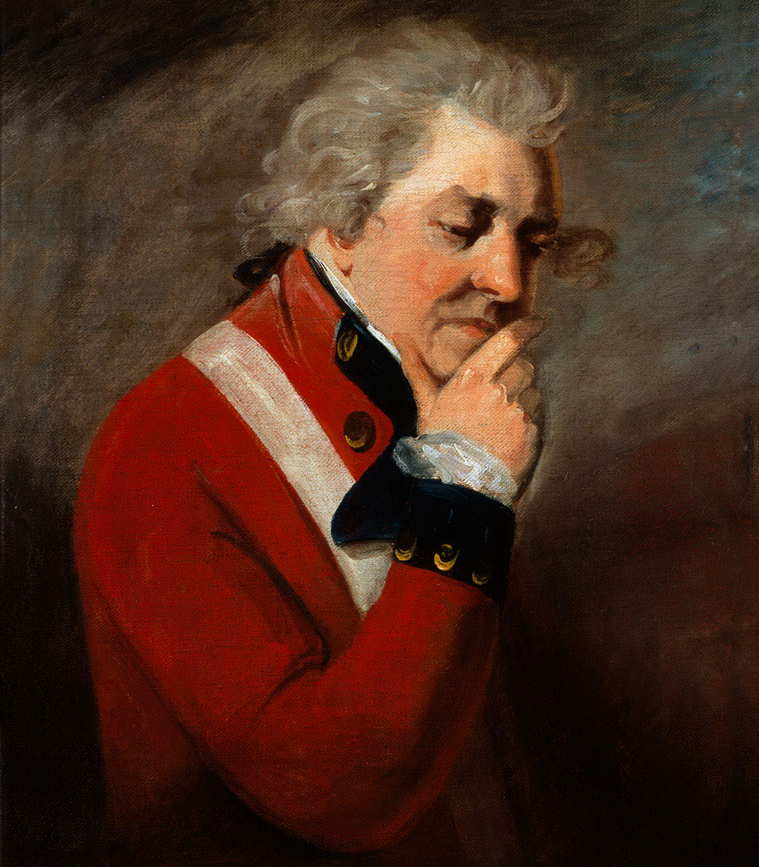 Lieutenant-General John Burgoyne (1722-1792), a study for a detail of 'The Funeral of General Simon Fraser, who was shot after the action at Saratoga, October 7, 1777' Oil on canvas attributed to John Graham (1755-1817), 1791 (c). National Army Museum
Henry Clinton (1730-1795)
General Clinton arrived in Boston in May 1775 and played an active role in the Battle of Bunker Hill, a costly British victory. During the war he often clashed with his commander, General Howe, predicting disaster if Howe did not support General Burgoyne’s march south from Canada.
Clinton led the force from New York that was to join Burgoyne’s army, a key part of the plan to isolate New England from the other colonies. But many of Clinton’s forces had been diverted by Howe, and he was never able to reach Burgoyne in time.
Clinton offered his resignation following his failure and Burgoyne’s defeat at Saratoga in 1777. Instead Howe was forced to resign and Clinton replaced him as Commander-in-Chief. The following year he invaded South Carolina and in 1780 captured Charleston.
Clinton was blamed for the surrender of British forces under General Cornwallis at Yorktown in 1781, the battle that marked the beginning of the end of the war. After this defeat he was replaced by Guy Carleton as Commander-in-Chief.
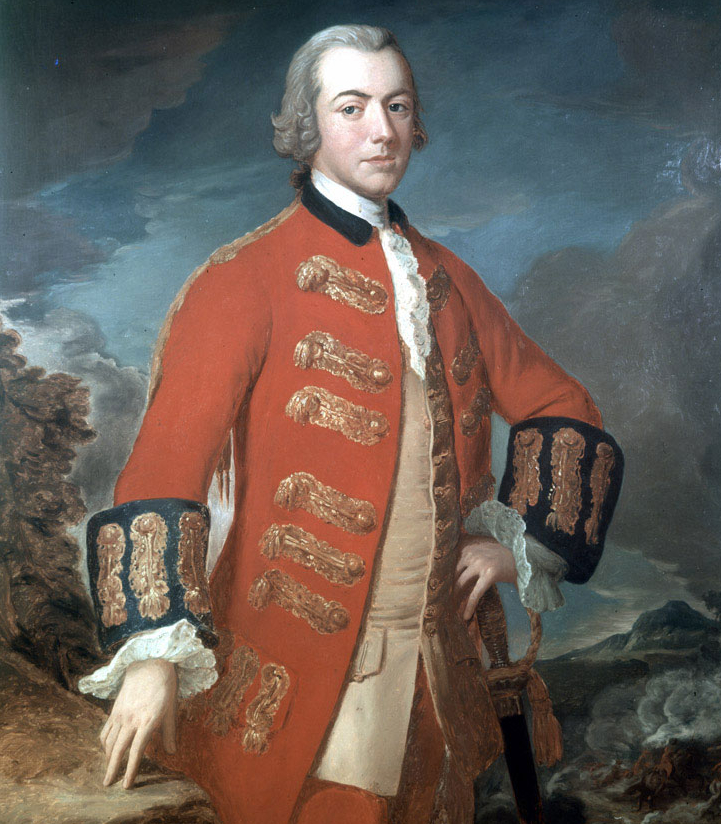 Captain and Lieutenant-Colonel Henry Clinton, 1st Regiment of Foot Guards, 1758 (c) Oil on canvas, attributed to M L Saunders, 1867, after the original attributed to Andrea Soldi (1703 (c)-1771), 1758 (c). National Army Museum
Charles Cornwallis (1738-1805)
Lord Cornwallis arrived in the American colonies in 1775, after a recent promotion to Major-General. Before the war, he had been sympathetic to American colonial demands in his position in the British Parliament’s House of Lords. Battles he took part in include Long Island, Brandywine and Germantown.
Cornwallis became General Clinton’s second in command and was responsible for heading the Southern Campaign, when Clinton returned to New York. He served at the siege of Charleston and went on to win the Battle of Camden, as well as seeing defeat at Cowpens in South Carolina.
He most remembered for the British surrender at Yorktown in 1781, after he pushed into Virginia without consulting Clinton. Yorktown was the final major battle of the American War of Independence.
Cornwallis served more than 40 years in the British Army becoming Governor General of India as well as Lord Lieutenant of Ireland. He returned to India in 1805 and is buried near Ghazipur, Uttar Pradesh.
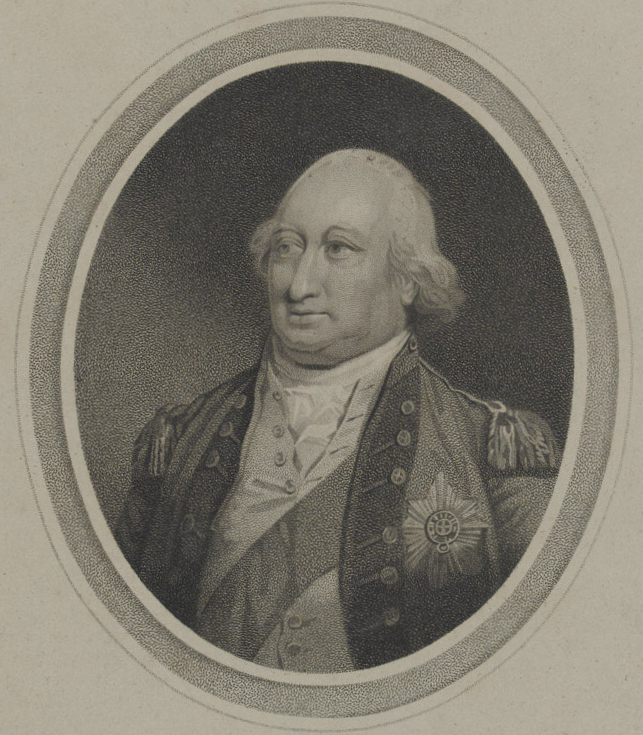 Lord Cornwallis, Stipple engraving in oval (miniature) style, published 1800 (c). National Army Museum
William Howe (1729-1813)
General Howe was Commander-in-Chief of British forces during the American War of Independence from 1775-1778. Howe led British troops in the costly victory of Bunker Hill at the start of the war.
He went on to successfully capture New York and Philadelphia but was blamed for poor planning contributing to the failure of the Saratoga campaign.
Burgoyne’s advance to Saratoga relied on support from Howe that never materialised. Howe was replaced after Saratoga by General Clinton.
Howe served as an MP for more than 20 years and became 5th Viscount Howe in 1799.
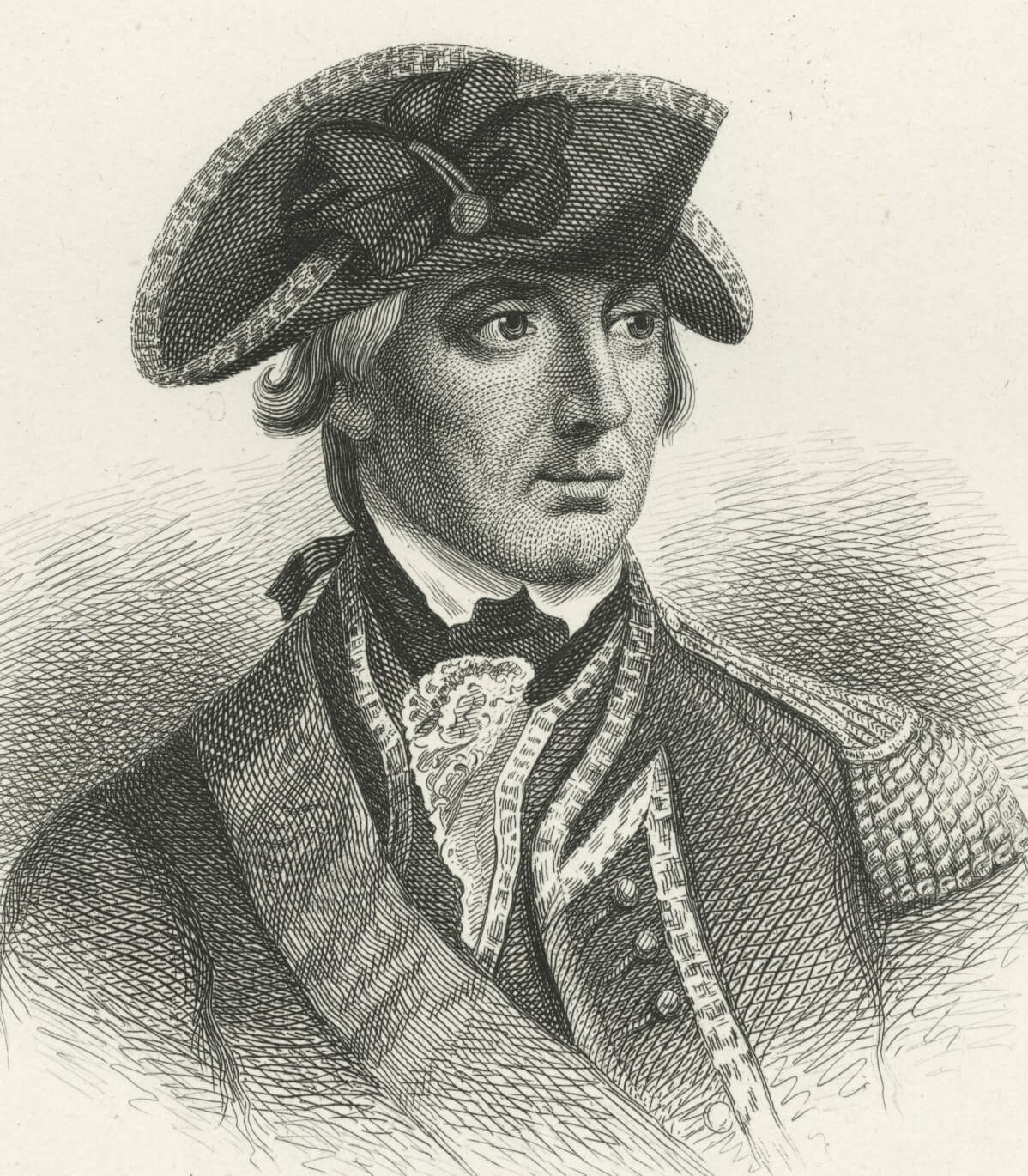 General Sir William Howe, engraving by Henry Bryan Hall, 1872, New York Public Library Digital Collection
Hugh Percy (1742-1814)
Percy was Colonel of the 5th Regiment of Foot from 1768. He arrived in Boston in 1774 and led the British relief column at the Battle of Lexington and Concord, the conflict that marked the start of the war. His actions likely saved the retreating British forces from complete disaster.
Percy commanded the Regiment during the Battle of Long Island and the storming of Fort Washington. He sailed back to England early in 1777.
In a letter dated 5th November 1784, after accepting a new Colonelcy with the Grenadier Guards, Percy said: "I cannot help feeling the greatest regret at quitting the Fifth Regiment of Foot, which I have had the pleasure of commanding for sixteen years ..."
Percy inherited the title of Duke of Northumberland in 1786.
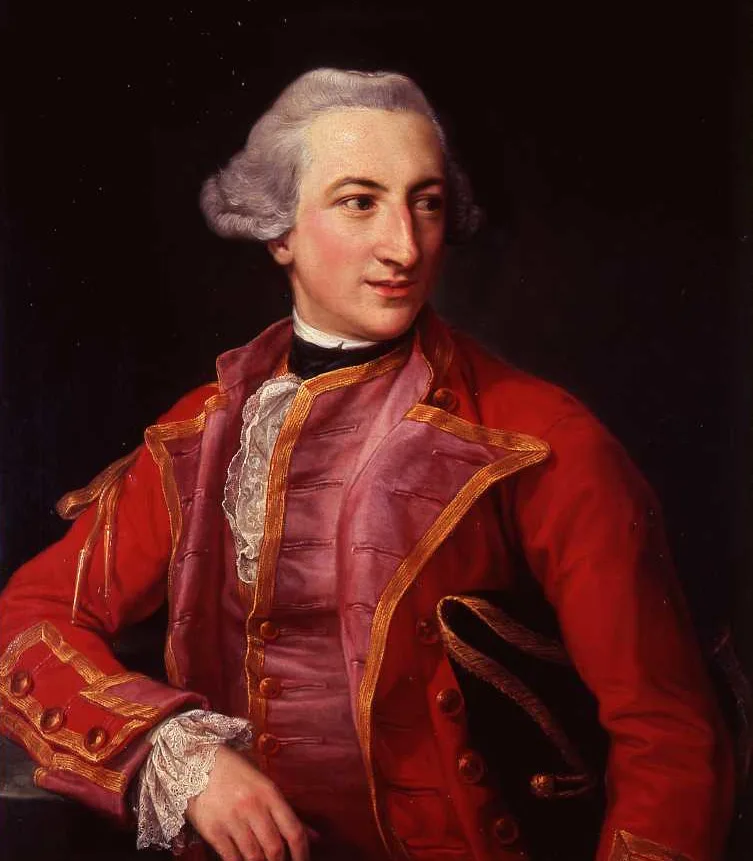 Hugh Percy, Second Duke of Northumberland. Collection of the Duke of Northumberland
Banastre Tarleton (1754-1833)
Tarleton is remembered for being a ruthless British officer who led the British Legion, a Loyalist American force that carried out effective raids against the Continental Army during the Southern Campaign. Within two years of arriving in the American colonies in 1776, Tarleton was appointed to command the Legion.
The Regiment, comprised of cavalry and light infantry, was also known as the Green Dragoons, after their distinctive uniforms. It acquired a reputation for brutality, with Tarleton popularly referred to in US accounts as “Bloody Ban”. The nickname originates from the Legion’s reputed failure to recognise the surrender of enemy troops.
Tarleton’s aggressive approach was exploited by Continental forces at the Battle of Cowpens when he was baited into a tactical trap by General Morgan, resulting in a devastating British defeat. Tarleton went to on have a long military career and later became an MP.
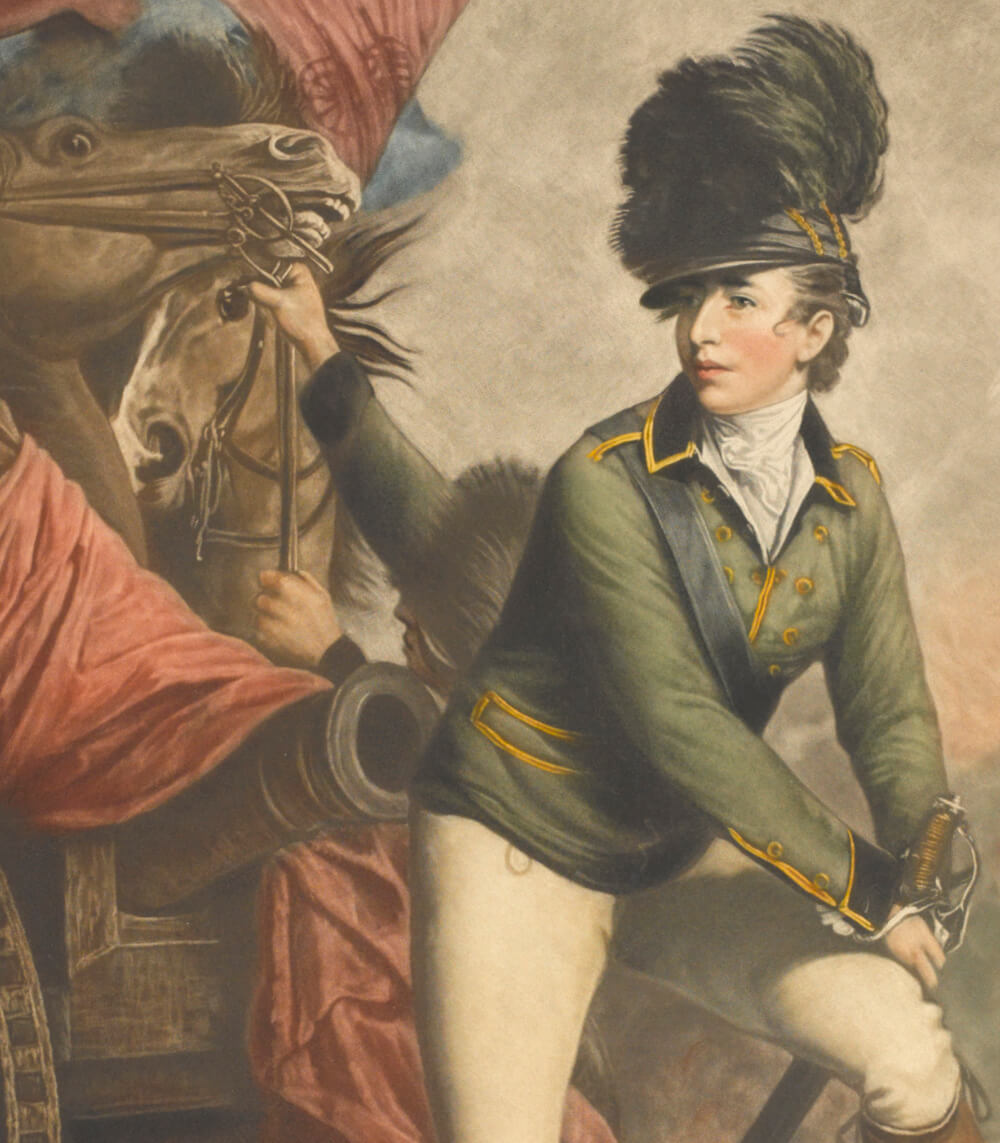 Lieutenant-Colonel Banastre Tarleton, 1782. Coloured mezzotint by Henry Macbeth Raeburn after Sir Joshua Reynolds (1723-1792), published by Graves and Co, 1927. National Army Museum.
The Americans
Benedict Arnold (1741-1801)
General Arnold served with distinction in the Continental Army but defected to the British side in 1780. He is largely remembered for being an American traitor.
Arnold was an early supporter of the Patriot cause and began the war as captain of the New Haven militia. He marched his men to Boston after hearing of the battles of Lexington and Concord in April 1775.
He took part in numerous battles, including leading the unsuccessful attack on Quebec in 1775 during which he was badly wounded in the leg, and played a key role in the Battle of Saratoga in 1777, where he received another leg injury.
Heavily in debt and passed over for promotion, Arnold negotiated with the British head of intelligence Major John Andre to hand over the fort of West Point to the British in 1780. The plot was discovered when Andre was captured. Andre was later executed and Arnold was widely blamed for his death.
Arnold served with the British after his defection, and he led raids in Virginia and Connecticut. After the war he settled in London.
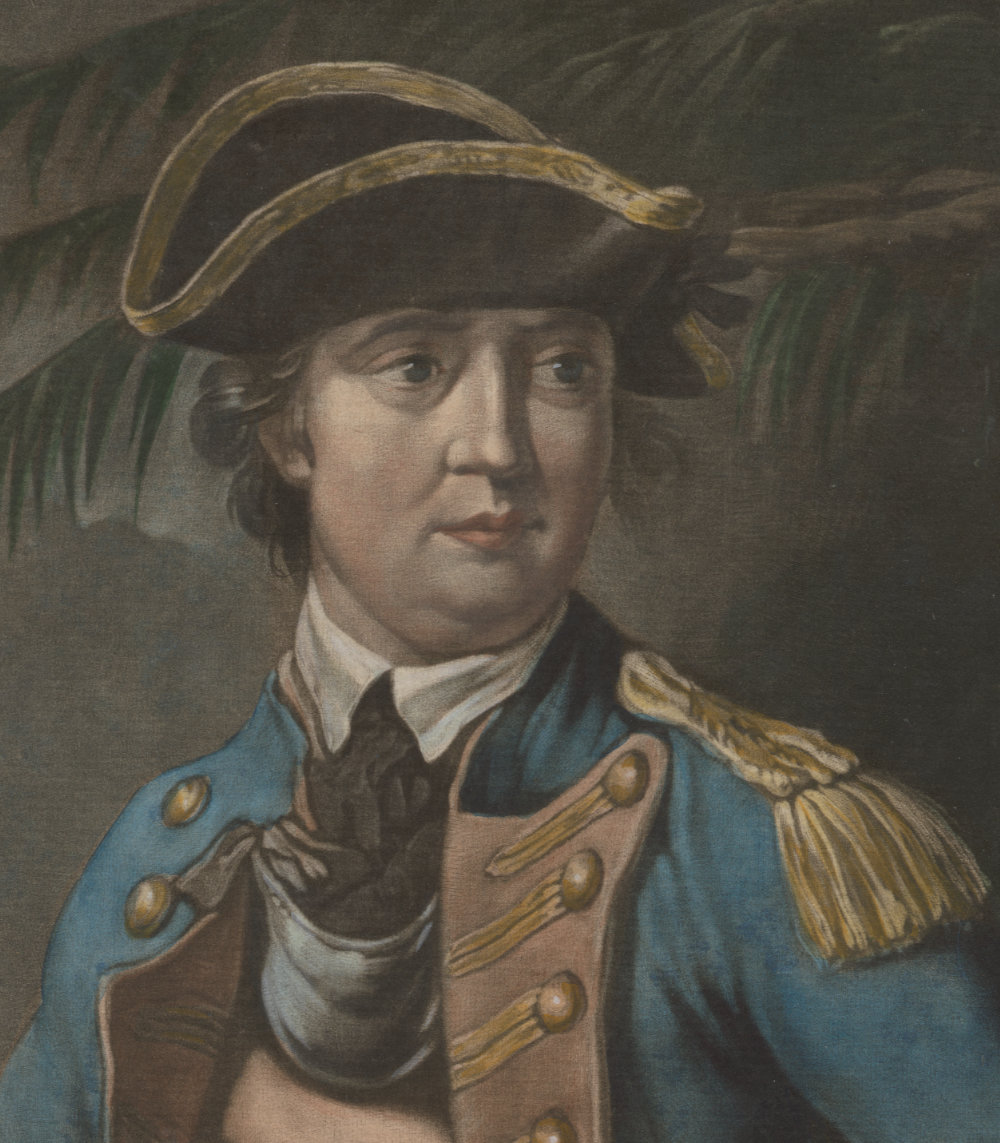 Colonel Arnold (1776). Prints, Drawings and Watercolors from the Anne S.K. Brown Military Collection. Brown Digital Repository. Brown University Library.
Horatio Gates (1727-1806)
Gates was a British-born major general in the Continental Army, who had served in the British Army with the 20th Regiment of Foot during the French and Indian War (1754-1763).
He later sold his commission, after becoming frustrated with a lack of promotion, and migrated to Virginia, buying a plantation.
Gates led the Continental Army to victory at the Battle of Saratoga in 1777 after which some members of Congress thought he might replace Washington as Commander-in-Chief.
A later defeat at the Battle of Camden, when he was outmatched by a British army half the size of Continental forces, destroyed his military reputation.
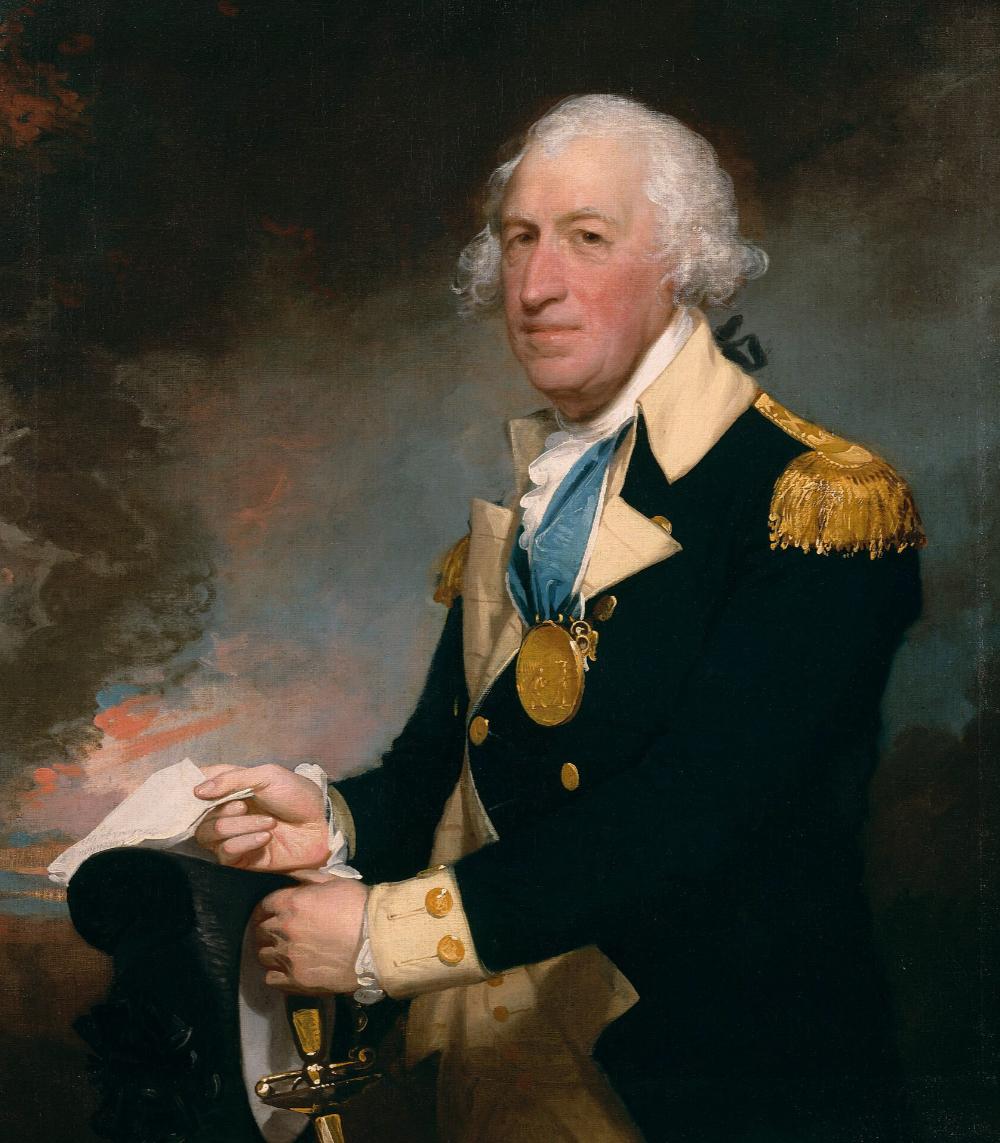 Horatio Gates, Gilbert Stuart (American, North Kingston, Rhode Island 1755–1828 Boston, Massachusetts). 1793–94, Gift of Lucille S. Pfeffer, 1977, Metropolitan Museum of Art
Richard Montgomery (1738-1775)
Montgomery was an Irish-born American army officer who became a Major-General in the Continental Army. He was killed leading an unsuccessful invasion of Quebec in 1775.
Montgomery had previously been a British Army officer who served during the French and Indian War (1754-1763). He left the British army and migrated to the Thirteen Colonies in 1773. He became a gentleman farmer and was elected to the New York Provincial Congress.
When war broke out, he joined the newly formed Continental Army to fight the British. He captured Fort St Jean and Fort Chambly in Canada in 1775, sending the abandoned colours of the 7th to Congress. They were the first colours ever captured by an American army.
Serving under the command of Benedict Arnold, Montgomery was killed during an attack on Quebec. His body was found by British forces who gave him an honourable burial.
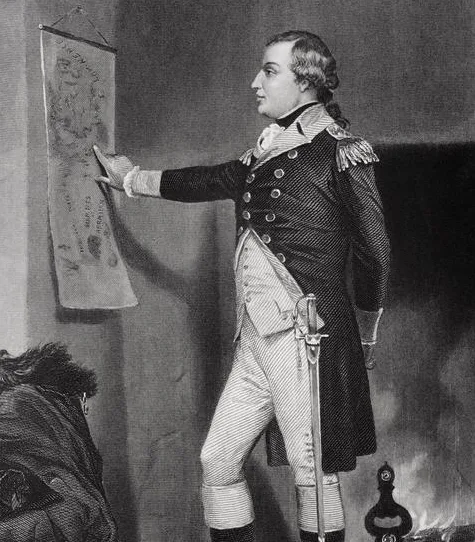 Full length engraving of General Richard Montgomery, by Alonzo Chappel, date unknown, Artfinder.com
Daniel Morgan (1736-1802)
Morgan was a Brigadier-General in the Continental Army and one of the most respected battlefield tacticians of the war. He is credited with masterminding the defeat of British forces at the Battle of Cowpens in 1781.
Early in the war, Morgan formed an elite company of sharpshooters who completed a gruelling 500-mile march from Virginia to Boston in just three weeks to support the siege of Boston.
Morgan served under Benedict Arnold in Quebec, where he was captured but later released in a prisoner swap. He and his riflemen contributed to the victory of the Continental Army at Saratoga by ruthlessly targeting British officers.
At Cowpens in South Carolina, Morgan took advantage of British officer Bannastre Tarleton’s reputation for quick action and baited him into a tactical trap, resulting in a British defeat.
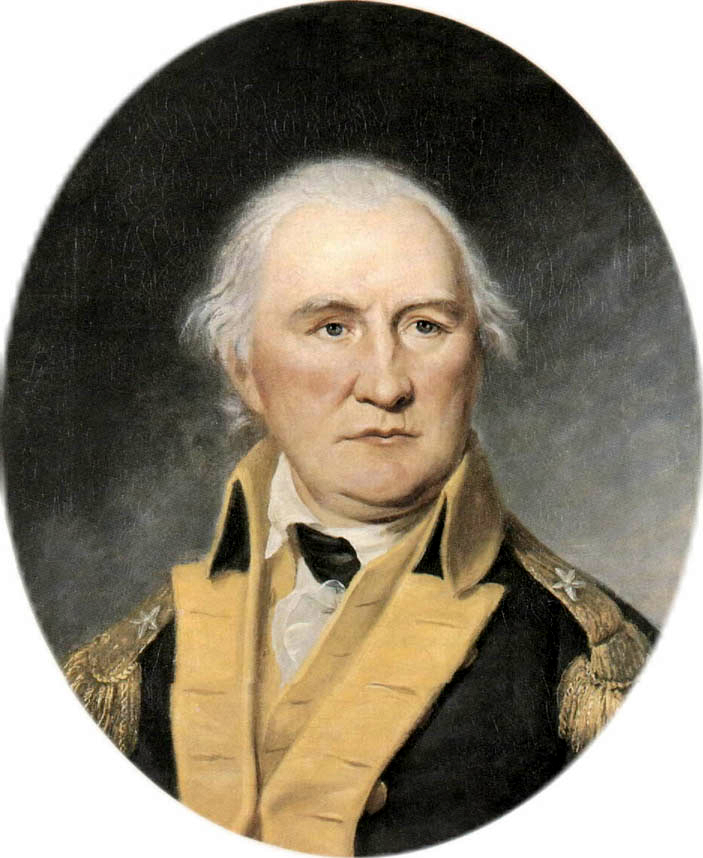 Daniel Morgan by Charles Willson Peale c1794, Independence National Historical Park
George Washington (1732-1799)
Washington was the Commander-in-Chief of the Continental Army and later the first President of the United States (1789-1797). Trained as a draughtsman and a mapmaker, Washington gained a commission as a major in the Virginia militia and went on to fight in the French and Indian War (1754-1763), alongside the British Army.
He was appointed Commander-in-Chief of the Continental Army in 1775. A talented strategist and inspirational military leader, he established an alliance with France after his victory over the British at the Battle of Saratoga in 1777.
French support proved decisive in Siege of Yorktown in 1781, forcing the British commander General Cornwallis to surrender, and ultimately leading to the overall defeat of British forces.
After the war, Congress presented Washington with two enemy colours, to commemorate victory over Britain. One of those was the 7th's King’s colour, captured at Fort Chambly in Canada in 1775. It is now on display in West Point Museum in the US.
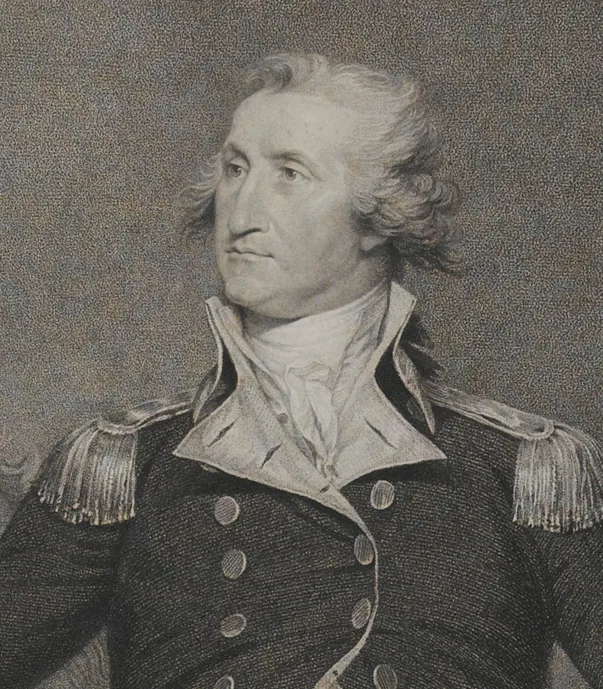 General George Washington, 1776. Stipple engraving by T Cheesman after John Trumbull (1756-1843), published by A C de Poggi, London. National Army Museum