


Fusiliers and the American War of Independence
20th Regiment of Foot

The 20th Regiment of Foot, later known as the Lancashire Fusiliers, helped to end the siege of Quebec in 1776 and played a key role in the gruelling Battle of Saratoga in 1777.
Quebec reinforcments
With British forces at Quebec under siege in early 1776, reinforcements were desperately needed by those trapped in the city. The 20th Foot was part of that essential relief force, sailing from Ireland early in the spring of 1776. It was to be the Regiment’s first experience of the war that had begun the year before. Transport to the American colonies was slow: sailing across the Atlantic could take up to two months, depending on the weather.
The Continental Army’s General Benedict Arnold had hung on since winter, keeping Quebec under siege, but he knew he could not withstand British reinforcements. With morale and supplies low and too few soldiers to take on the fresh British troops, the Continental Army fled when the 20th arrived.
With the city finally free, including a company of the 7th Foot that had been trapped by the siege, the British Lieutenant General Carleton marched out with his remaining soldiers and the reinforcements. They chased the retreating Continental Army out of Canada. The 20th was stationed at a fort near Lake Champlain until spring of 1777, when they were assigned to General John Burgoyne. The Regiment was to play a key role in the British strategy to cut off New England. The plan was for Burgoyne’s men from Canada to head about 300 miles south, to meet British forces from New York, a classic pincer movement that would isolate the most troublesome colonies.
Initially during the journey, Burgoyne’s forces had some success capturing two American forts, but trekking through the wilderness was slow going. The British had to build or repair more than 40 bridges and create log roads, to cross tracts of boggy ground. Burgoyne’s forces had with huge amounts of baggage – records suggest about 500 wagons - many of which fell apart on the journey. Nicknamed “Gentleman Johnny”, Burgoyne is reputed to have travelled with generous supplies of champagne and claret. At times the army travelled only one mile a day. Ordinary soldiers were dressed in thick wool uniforms in the height of summer and carried packs of up to 54kg (120lbs) including their muskets. By the time they got to the Hudson River at the end of July they were exhausted and running out of provisions.
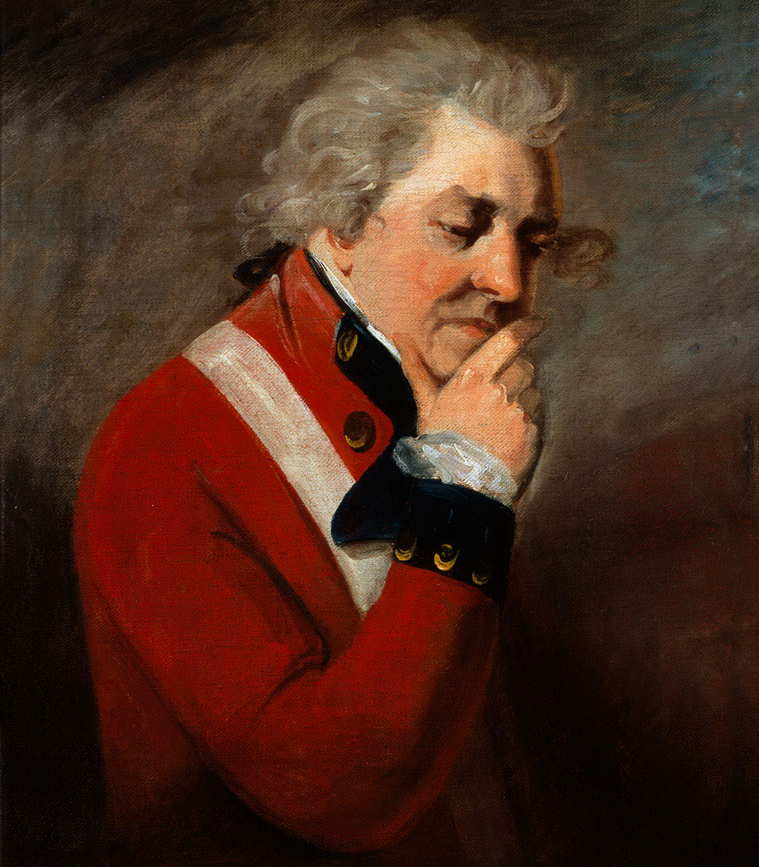 Lieutenant-General John Burgoyne (1722-1792), a study for a detail of 'The Funeral of General Simon Fraser, who was shot after the action at Saratoga, October 7, 1777' Oil on canvas attributed to John Graham (1755-1817), 1791 (c). National Army Museum
Battle of Saratoga
At Saratoga, in upstate New York, Burgoyne faced a Continental Army led by General Horatio Gates, with General Arnold and General Daniel Morgan commanding the field. The first battle on 19 September was long and brutal with the 20th taking significant casualties: accounts record about 350 killed or wounded, from a force of 800. The Regiment fought alongside 9th, 21st 24th, 27th and 62nd Regiments, as well as German auxiliaries. An unusually high number of British officers were killed or wounded, picked off by Morgan’s company of sharpshooters. The snipers easily identified the officers by their shiny silver or brass gorgets.
“For four hours a constant blaze of fire was kept up… Men, and particularly officers dropped every moment”
Sergeant Lamb of the 9th Foot.
Initially Burgoyne gained a tactical victory initially but as skirmishes continued over the next few days, the British were deserted by their native American forces, further reducing their numbers. The British were outnumbered by at least two to one, partly down to the growing number of militia forces that continued to arrive and swell the ranks of the Continental Army. Burgoyne waited two weeks for reinforcements that would never arrive. British General Clinton had been unable to reach Burgoyne, partly because some of his forces had been diverted to Philadelphia. Burgoyne attacked again on 7 October - known as the Battle of Bemis Heights - but lost. Finally acknowledging his forces were encircled and vastly outnumbered, Burgoyne surrendered on 17 October. The defeat buoyed the morale of the Continental Army, and helped to persuade the French of British fallibility, prompting them to enter the war on the American side in 1778.
British and German troops, agreed to lay down their arms after Saratoga on condition they would return home and no longer serve in the American war. Gates agreed to the terms of this gentlemanly “convention”, but the agreement was later revoked by Congress, in what was seen by the British as a dishonourable betrayal. While most officers were eventually exchanged, many men were interned as prisoners of war. Known as the Convention Army, about 5,000 British and German troops were first held in Massachusetts, and then marched south to Virginia, a journey of 700 miles.
Prisoners of war
It was not uncommon for wives to travel with their husbands on campaigns – about 2,000 women and just over 7,000 soldiers made up the force led by Burgoyne from Canada. One woman who was celebrated for her devotion to her husband is Lady Harriet Acland who was married to Major Acland of the 20th. The major was shot through both legs during the second battle of Saratoga and taken prisoner. Lady Harriet, six months pregnant at the time, appealed to Burgoyne to let her across enemy lines to nurse her husband. When she reached the Continental forces, she also charmed the American General Gates.
The treatment of captured officers was often different to that of ordinary soldiers. While officers might be billeted with local families and invited to social events when prisoners of war, rank and file soldiers - some accompanied by wives and children -often endured poor accommodation and little food. While some of the Convention Army escaped or deserted during their five years in captivity, it is likely a significant number perished from forced marches and diseases like dysentery. Many of the 20th remained prisoners until the end of the war, returning home in 1783.
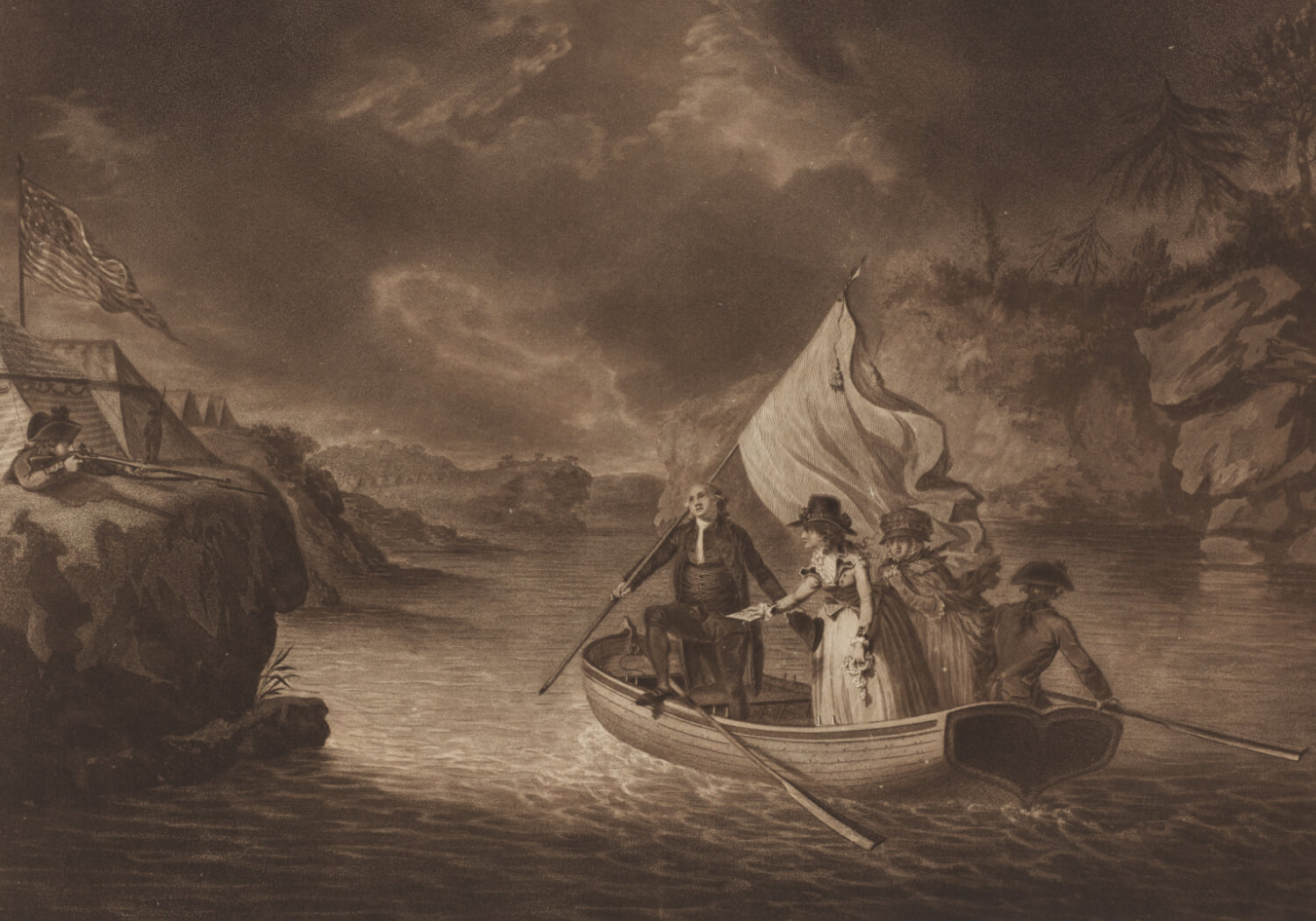 Lady Harriet Acland, Crossing the Hudson River to the American Lines. Engraved and published by Robert Pollard Engraver Aquatint by Francis Jukes November 15, 1784. Metropolitan Museum of Art